
Understanding what acquirers look for can help you navigate the merchant account approval process successfully. In this second post in a series of three, we’ll break down how payment providers assess your business, based on its maturity, marketing strategies, and public reputation. Acquirers value predictability and security, so demonstrating that your business is stable and transparent can help speed up your approval.
We recommend that you also read the other two parts of the series. In Part 1 we explained how to view your business from an underwriter’s perspective, focusing on your website, supply chain, and fulfilment processes. In Part 3, we’ll cover compliance, legal disclosures, and how to maintain a strong relationship with your acquirer as your business grows.
Assessing Your Business Maturity
Underwriters view brand-new ventures and established companies very differently. You can improve your application’s chances simply by understanding which category you fit into and providing the right evidence to match.
Starting a New Venture
If you are launching a new business, you will not have the processing history that underwriters use to assess the risk of an established business. However, payment providers do not automatically see this as a negative. It just changes the type of documentation you need to supply.
The acquirer will ask to see a comprehensive business plan with a detailed cash flow model. Without historical data, the underwriting team evaluates the depth of your preparation.
To prove your credibility, be ready to clearly explain your business model. You should be able to answer these straightforward questions:
- Who is your target market?
- What are your precise unit economics?
- How much does it cost you to acquire a single customer?
- When do you project the business will become profitable?
If you have previous industry experience, highlight it. A solid plan backed by founder expertise builds immediate trust.
Running an Established Business
If your business is already trading, the acquirer will focus entirely on your track record. They will closely analyse your processing history, supplier payments, and refund ratios. For merchants in high-risk sectors, they will pay particular attention to your dispute and chargeback levels.
For an established business, the most important factor is consistency. The underwriter wants to see that your incoming revenue aligns perfectly with your outgoing supplier payments.
To present your established business in the best light, you should provide:
- Three to six months of recent processing statements.
- Corresponding business bank statements showing the settlement of those funds.
- Clear evidence of matching payments going out to your suppliers.
If all your numbers reconcile and all areas of your business are in alignment, the acquirer gains confidence in your operational control.
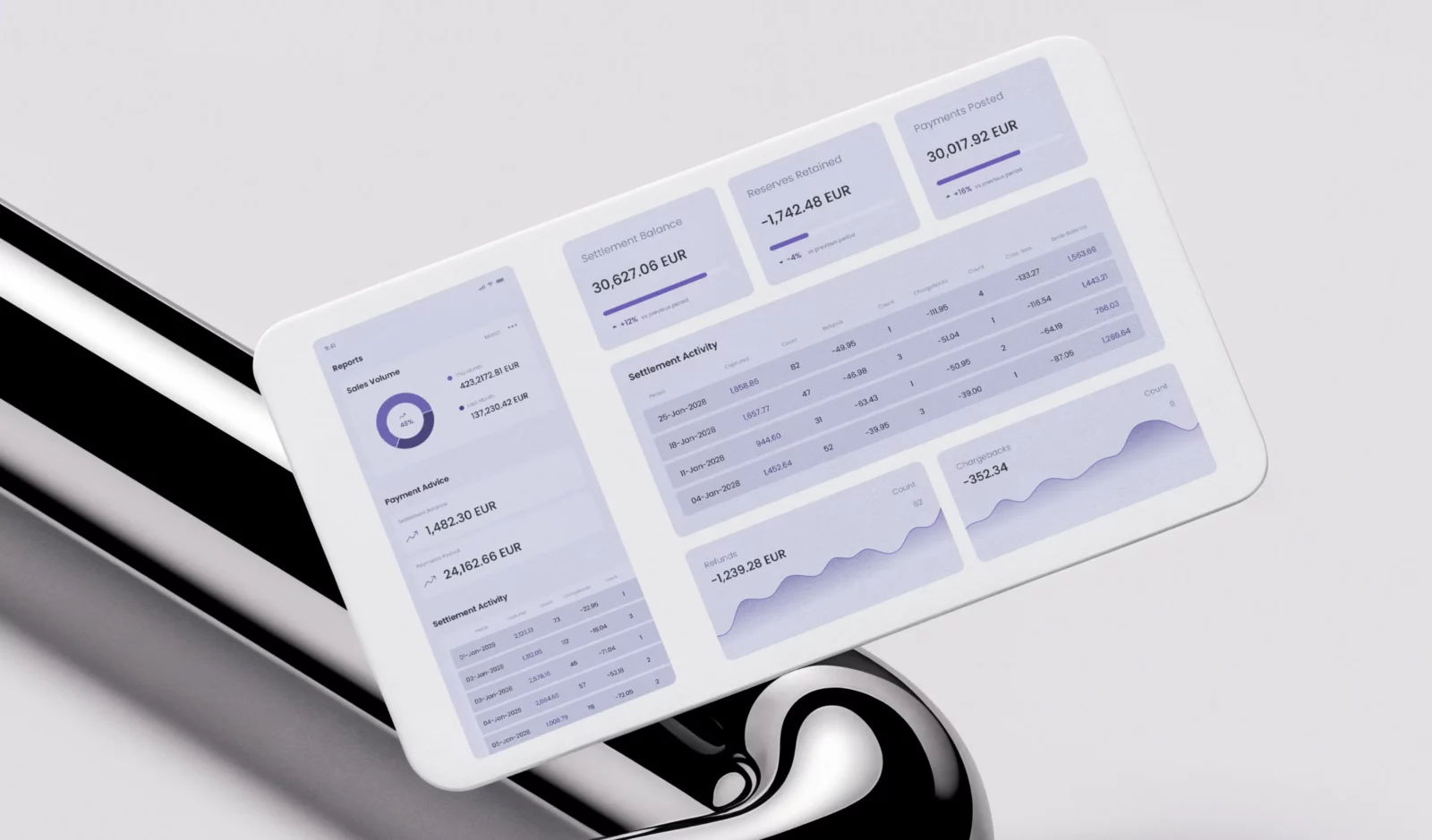
CardCorp Merchant Hub gives you real-time transaction data and settlement reports for reconciling your merchant account.
Map Your Customer Journey
Your business revenue does not exist in a vacuum. Every transaction comes from a specific customer acquisition pathway. Underwriters will always want to know how customers find your business. If you cannot explain this clearly, it implies uncontrolled risk. Unexplained web traffic puts you at an immediate disadvantage with the acquirer.
Document Your Marketing
Whether you run a B2C or a B2B operation, you must show the acquirer how you generate your traffic. For instance, you should explain if you rely on paid social media adverts, search engine optimisation, affiliate networks, or direct outreach.
The exact marketing channel matters much less than your ability to explain it clearly. If you claim to process high transaction volumes, the acquirer needs to see a realistic, traceable pathway that brings those buyers to your checkout.
Prove Your Traffic
Underwriters often use external tools to verify your website traffic independently. If you project massive sales volumes, they expect to see digital evidence that matches that scale.
You do not need to show a huge scale to get approved; you simply need to prove that your traffic sources are real. To demonstrate your customer acquisition strategy, prepare the following:
- Paid Advertising: Recent invoices or screenshots of active ad accounts.
- Affiliate Marketing: Copies of your agreements with affiliate networks or individual partners.
- Organic Traffic: A brief explanation of your SEO strategy and how you built your search presence.
By laying out your marketing mechanics transparently, you remove the guesswork for the underwriter.
Manage Your Public Reputation
When you make claims about your business online, underwriters treat them as factual statements. This is an area where many merchants unintentionally trip up during the application process.
Keep Claims Realistic
If your website boasts that you have “38,000 satisfied customers,” the underwriting team will look for public evidence to back that up. They will check review platforms like Trustpilot, browse social media mentions, and look at general search results.
They do not expect a perfect track record because every business gets a bad review now and then. Instead, they are looking for authenticity. If you claim to have years of experience and massive scale, but a Google search reveals very little about your brand, it substantially weakens your application.
Show Professional Restraint
When dealing with regulated financial institutions, it is always wiser to understate your achievements than to exaggerate them. Taking a conservative approach makes your business appear mature, compliant, and fully in control.
Exaggerated marketing might sound great to a shopper, but it introduces unnecessary doubt during a risk assessment. Ensure your public claims align closely with reality, and be ready to supply links to your genuine customer reviews.
Secure Your Payment Setup
Applying for a merchant account does not have to be a stressful ordeal. By understanding what providers expect, gathering the right documents early, and presenting a transparent business model, you can confidently navigate the approval process.
At CardCorp, we support businesses across the UK and Europe with payments infrastructure. With our fast onboarding and expert customer service, you can secure the robust payment processing you need. Organise your business plans, document your marketing clearly, and partner with a provider that actively supports your growth.
After you’re approved, CardCorp supports your integration with our payment gateway.
To get the full picture of merchant account approval, be sure to check out Part 1 for advice on presenting your website, supply chain, and fulfilment, and look ahead to Part 3 for essential compliance tips and long-term strategies.